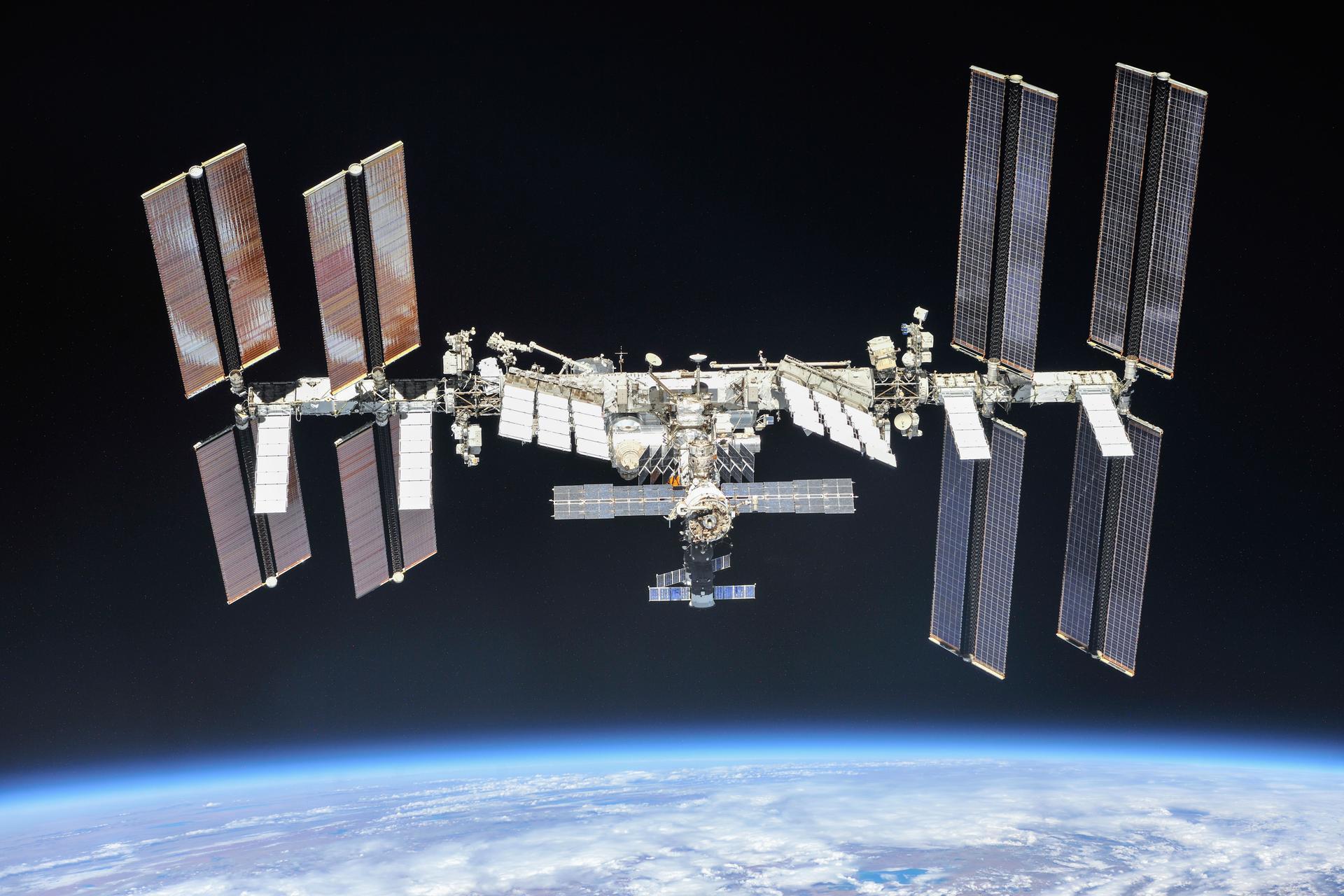
The whole International Space Station: solar arrays and modules, with Earth's atmosphere below.
About

A Cosmos Robot Works event that begins with space imagery, grows through questions and continues with scientific discovery.

Image: The whole International Space Station. · NASA/Roscosmos · iss056e201248

01

What is Astro Camp?

Astro Camp is the face-to-face discovery event by Cosmos Robot Works, bringing space, astronomy, science and engineering together.

It feels less like a lecture than a show: on a large screen, real space photographs, scientific diagrams, animations and questions unfold in sequence while students watch, predict and take part by raising their hands.

The Cosmos Robot Works team brings the story and the audience together: each topic opens up a new question, a new observation and a discovery to discuss.
02

The NASA ACCP programme

Astro Camp is organised by Cosmos Robot Works as part of the NASA ASTRO CAMP Community Partners (ACCP) programme.

The space imagery used in the event comes from NASA's publicly available image archive and is credited on every image. This is not NASA's official website; using NASA imagery does not imply NASA's approval or endorsement. For official details about the programme, please refer to NASA's own sources.

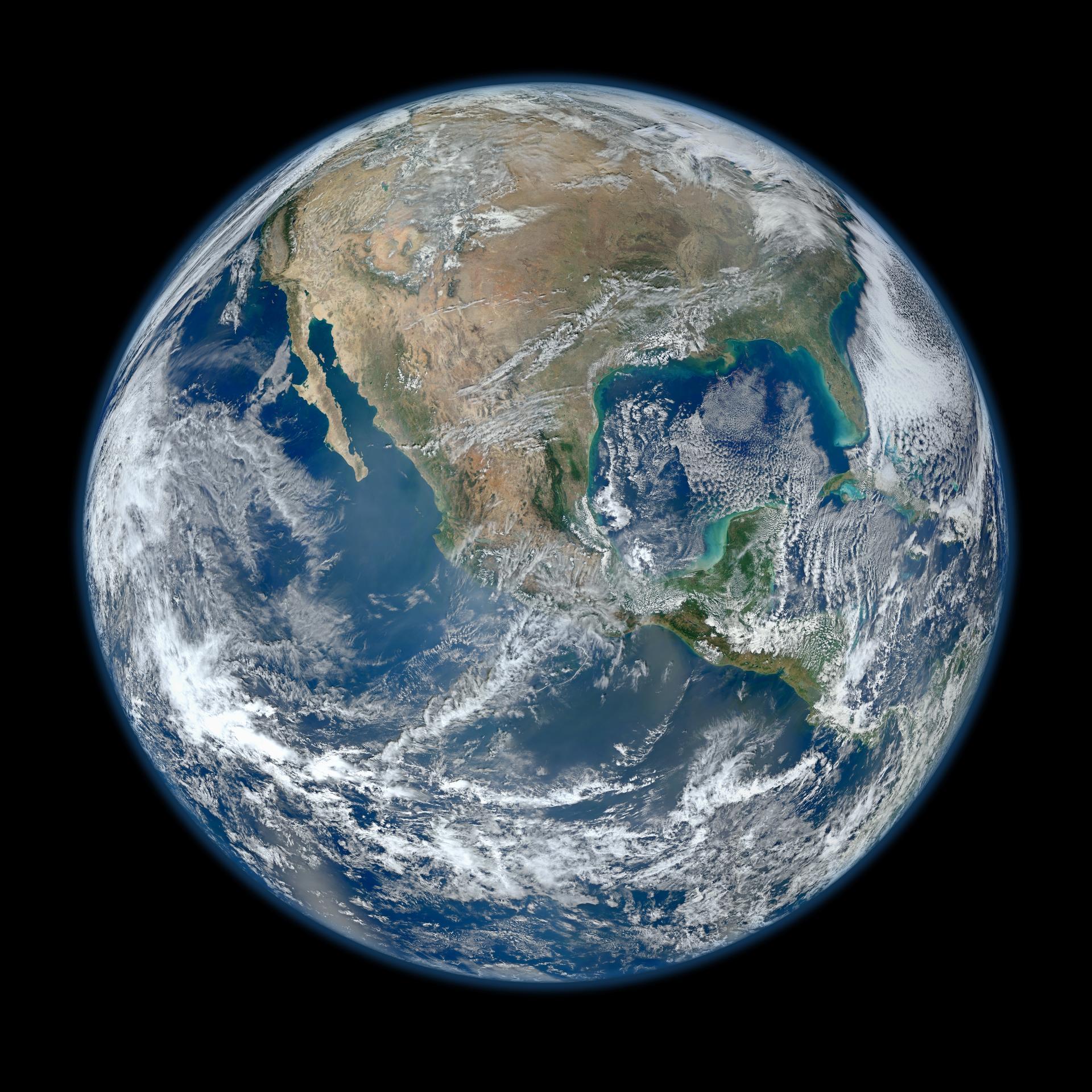
Earth from space: a full-disc view showing North and Central America.
The Blue Marble: Earth seen by the Suomi NPP satellite.Image: NASA/NOAA/GSFC/Suomi NPP/VIIRS/Norman Kuring · GSFC_20171208_Archive_e001386

03

The goals of the programme

To nurture scientific curiosity, make space science accessible, inspire an interest in STEM through discovery, encourage scientific thinking and inspire the scientists and engineers of the future.

Before any measurable output, these goals describe an attitude: a student who is not afraid to ask, who observes, and who questions what they see.

04

Teaching approach

Teaching follows a five-step method: explore, question, predict, observe, learn. Every topic opens with an image or a question; the answer is not given straight away, students are first asked to predict.

The explanations are visual and accessible: technical terms are explained with everyday examples, big numbers are made concrete with familiar comparisons, and every screen focuses on a single scientific idea.

05

How do we discover together?

The Cosmos Robot Works team begins with a question and participants share their predictions. We then examine real imagery and scientific explanations together to find the answer.

Run with one screen and one instructor, the format suits large halls where hundreds of students can take part at once. Students use no personal devices.

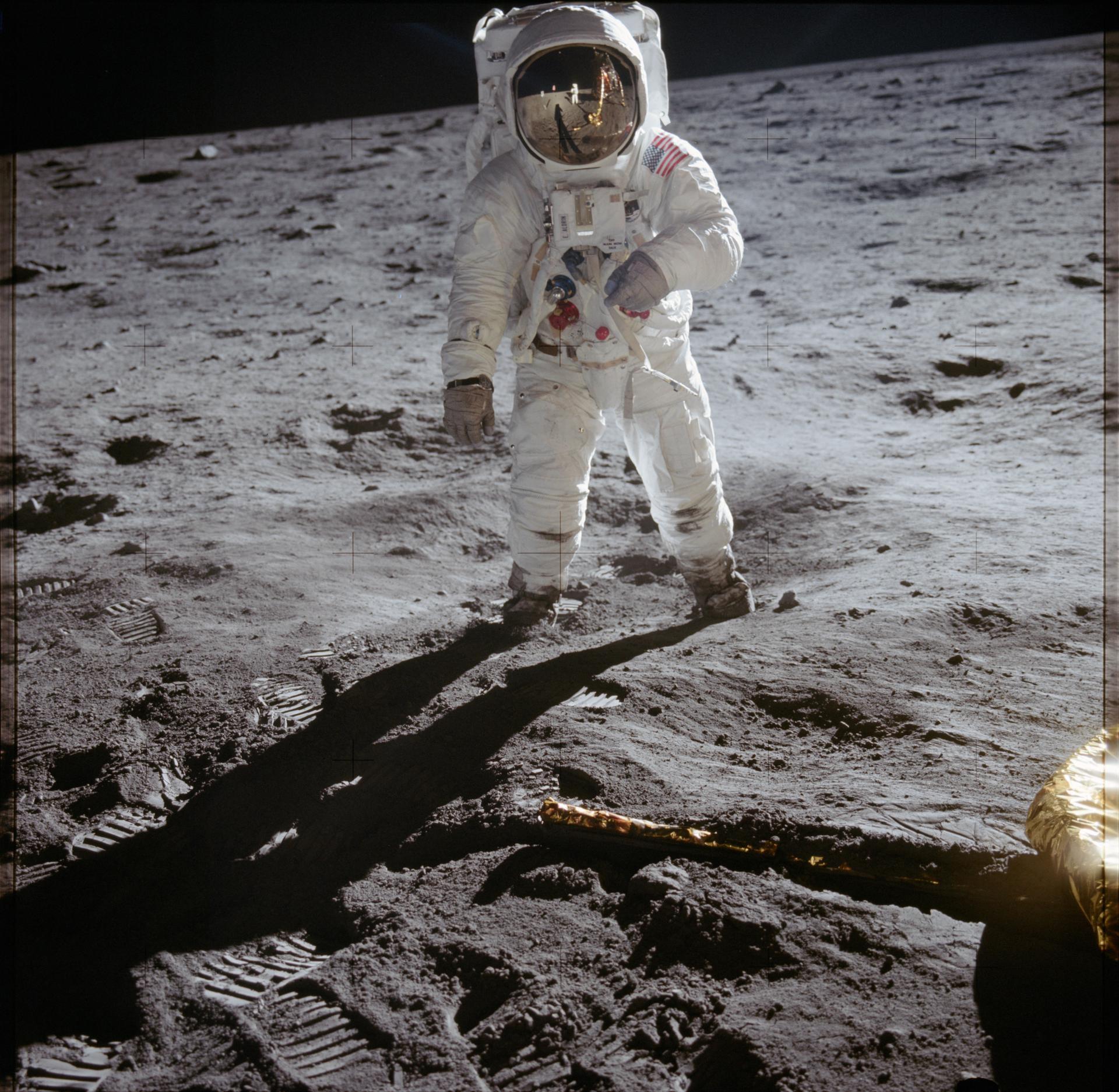
Buzz Aldrin walking on the lunar surface next to the Apollo 11 lander, with grey ground and sharp shadows.
Apollo 11 on the lunar surface, 1969.Image: NASA · as11-40-5903

06

The role of Cosmos Robot Works

Cosmos Robot Works (FRC #7742) organises and runs Astro Camp: it prepares the event content, develops the presentation system and plans events together with schools.

Alongside its robotics work in the FIRST Robotics Competition, the team sees spreading science and technology education as a responsibility.

07

Expected learning outcomes

By the end of the event, students are expected to recognise the basic concepts of the Solar System and spacecraft, to compare an observation with their prediction, and to be keen to ask scientific questions.

These outcomes are not assessed with an exam or a measuring tool; the event does not award grades or certificates.

08

Long-term vision

To build a repeatable, scalable event format that can bring space and science education to students in different cities, including schools with limited resources.

09

Sustainability

Event content is structured to be prepared once and used many times; new topics and new events are easily added to the existing infrastructure.

The presentation system is designed to work without depending on an internet connection, so it can also be used in halls with limited connectivity.